banner


How To Repair Graphics Cards

Introduction

Graphics cards "fire out" and are not usable later 5-10 years of operation. Every bit these "burn outs" occur, some graphics cards can exist recovered temporarily using these steps.

While following this guide, exist extremely careful- this procedure tin can potentially damage your GPU beyond repair. Applying heat to a video carte du jour for a continuous amount of time will melt the solder connections and potentially repair any damaged solder points.

Warning: Be cautious of toxic gas that is created when heating up plastic, solder, and electrical components. Always wear protective clothing and gloves when handling heated materials. Ensure you properly ventilate the expanse you lot are working in and do non breathe in toxic fumes.

  1. Send the card back to the manufacturer for repairs if the warranty is valid. This procedure will void your warranty.

    • Ship the card back to the manufacturer for repairs if the warranty is valid. This process will void your warranty.

    • Check to see if your warranty is valid. This tin can be done by looking upwardly the serial number of your graphics card for retail cards in most situations. For OEM video cards, the warranty is tied to the system and may expire sooner so a retail card.

  2. If the graphics card is still installed into the system, begin by removing the card.

    • If the graphics carte is still installed into the system, begin by removing the menu.

    • Unplug all applicable cables from the graphics card as highlighted in blueish, your card may have more than or less cables

  3. To remove your card you'll need to remove the screw(s) from the back of the card

    • To remove your bill of fare you'll need to remove the screw(s) from the back of the card

    • After doing so ensure that there is no other things blocking the card from being removed from the motherboard

    • Remove the card from the PC

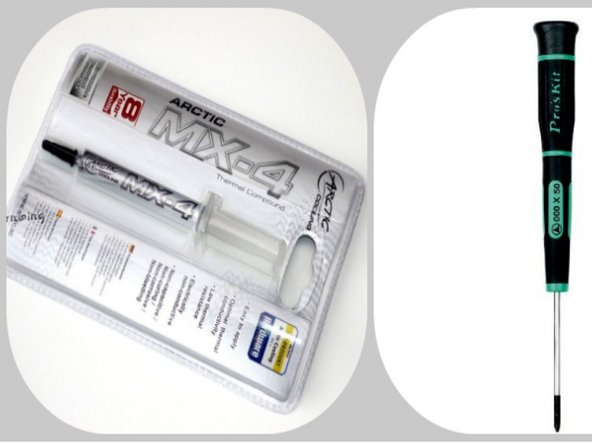
  4. Precision screwdriver(s): usually Phillips #0 and/or #1.

    • Precision screwdriver(southward): commonly Phillips #0 and/or #1.

    • Aluminum foil to cover estrus sensitive components while propping the card up onto the tray.

    • Thermal paste to supervene upon the paste afterwards.

    • Paper towels to rub any excess of old heatsink chemical compound from the components. (Alcohol wipes work equally-well)

    • An oven.

    • A baking tray.

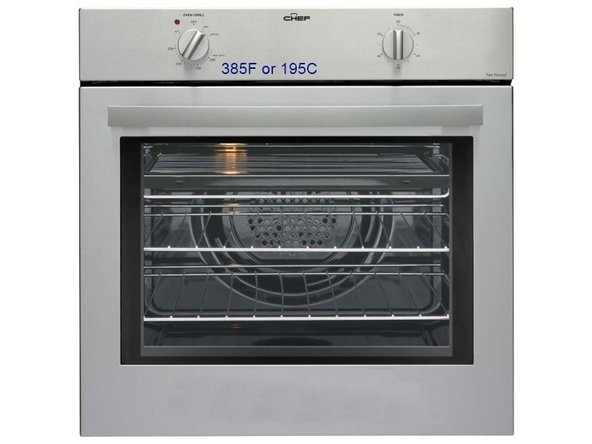
  5. Preheat the oven to 385F (195C).

    • Preheat the oven to 385F (195C).

    • Experiment with lower heats first, and increase temperature as necessary.

    • If you've already finished this guide one time and are baking once more, increase the temperature slightly - 395F (200C) or 400F (205C).

    • Well-nigh of these temporary repairs only consist of the expanding/shrinking of bumps under the surface mount of the graphics chip. Therefore, a lower heat may work as well.

  6. While the oven is pre-heating: Locate specific guides for disassembling your GPU if these steps are inapplicable to your GPU.

    • While the oven is pre-heating:

    • Locate specific guides for disassembling your GPU if these steps are inapplicable to your GPU.

    • Remove the screws or clips holding your fan and any duct-work to the video carte.

    • Gently take the fan/duct-work off.

    • Remove whatever old heatsink compound from the chips (using a paper towel).

    • Identify the screws in a condom place.

    • Remove plastic components. Plastic will melt in the oven, and produce toxic fumes.

    • Drag GPU around the edges, never let the components touch whatsoever surface.

  7. Use any provided times as an estimate - different materials melt at different temperatures.

    • Use any provided times as an estimate - unlike materials melt at different temperatures.

    • Rut the GPU slowly.

    • GPU completion times: PS: 3-6 minutes, Xbox: 4-vi minutes, desktop boards: 12 minutes, laptop boards: 8 - 12 minutes, GFX: 8 - xv minutes.

    • Be patient. If your oven has a window, check if the solder has melted visibly.

    • Fix the timer on your oven for 5 -10 minutes.

  8. Prevent the GPU components from touching any surface by elevating the edges of the card with foil. Do not leave the oven unattended.

    • Prevent the GPU components from touching any surface by elevating the edges of the card with foil.

    • Do not leave the oven unattended.

    • Place the GPU on a baking sheet with the side with virtually of the chips facing up.

    • Place the baking canvass or dish in the centre of the oven.

  9. Vent the oven 5 - 10 times by opening the door. This will regulate temperature.

    • Vent the oven five - x times by opening the door. This will regulate temperature.

    • Movements can crusade liquid solder to solidify incorrectly and ruin the card.

    • You volition detect a scent from the molten solder/flux.

    • Do not utilize fans for cooling.

  10. You have 2 options:

    • You have 2 options:

    • i. Test the card quickly without reinstalling the fan/heatsink.

    • Do not operate the GPU with heatsink/fan removed for more than than thirty seconds.

    • 2. Reinstall the fan/heatsink, so test the carte du jour.

    • Echo steps 2-9 if GPU fails test.

    • Go on to pace ten if GPU passes test.

    • Nearly people will want to test the carte du jour to see if it powers on and passes the POST.

  11. Apply thermal paste onto the main chip or on the connection side of the fan. Place the heat-sink over the GPU carefully, lining up any screws or clips.

    • Apply thermal paste onto the primary fleck or on the connectedness side of the fan.

    • Place the heat-sink over the GPU advisedly, lining up whatsoever screws or clips.

    • Apply heatsink on thermal pads equally applicative.

    • Use only a minor amount of heatsink and spread evenly using a card, or employ pressure evenly when connecting components.

    • If at that place is thermal record or pads that were removed for the reflow, identify these back in their original position.

  12. Insert and tighten all the screws carefully. They are quite small, and the PCB may be damaged if the screws are over tightened. Tighten the screws in an alternating pattern.  E.G.  Top left, Bottom right, Top right, Bottom left. With more than 4 screws, use a "Star" pattern when tightening the screws ensuring all screws are evenly tightened.

    • Insert and tighten all the screws carefully. They are quite small, and the PCB may be damaged if the screws are over tightened.

    • Tighten the screws in an alternating blueprint. E.One thousand. Top left, Bottom right, Top right, Bottom left. With more than than 4 screws, utilise a "Star" pattern when tightening the screws ensuring all screws are evenly tightened.

    • Clean off any noticeable dust on the GPU.

  13. Reinsert GPU into GPU slot on motherboard.

    • Reinsert GPU into GPU slot on motherboard.

    • Monitor GPU temperatures while PC is at idle, opening programs, while performing intensive tasks.

    • GPUs overheat at effectually 90C

  14. Verify that the fan was reconnected (if there is one).

    • Verify that the fan was reconnected (if in that location is 1).

    • Verify that the fan spins when the PC is powered upward.

    • Verify the GPU works and is detectable by the system.

    • A good program to get is GPU-Z. it tin can display the GPU temperature on supported cards.

Embed this guide

Choose a size and copy the code below to embed this guide every bit a minor widget on your site / forum.

Preview

Source: https://www.ifixit.com/Guide/Temporarily+Repair+a+Lost+Cause+Graphics+Card+by+Heating+it+up+in+an+oven/2240

Posted by: larsonexampations.blogspot.com

0 Response to "How To Repair Graphics Cards"

Post a Comment

Iklan Atas Artikel

Iklan Tengah Artikel 1

Iklan Tengah Artikel 2

Iklan Bawah Artikel